ACT002 - Receptor "Y"
A New Approach to Combat Pancreatic Cancer
One of the research areas we are currently focusing on is the development of new treatments for "pancreatic cancer." Pancreatic cancer is one of the most difficult cancers to treat, known for its low survival rate due to difficulty in early detection and often advanced stage at diagnosis.
Discovery of Cancer Stem Cells and Receptor "Y"
Our research team focused on "cancer stem cells," which are responsible for cancer recurrence and metastasis. We discovered "Receptor Y (tentative name)," which is specifically expressed in pancreatic cancer cells. This Y receptor is a characteristic marker found only in cancer stem cells and not in normal cells.
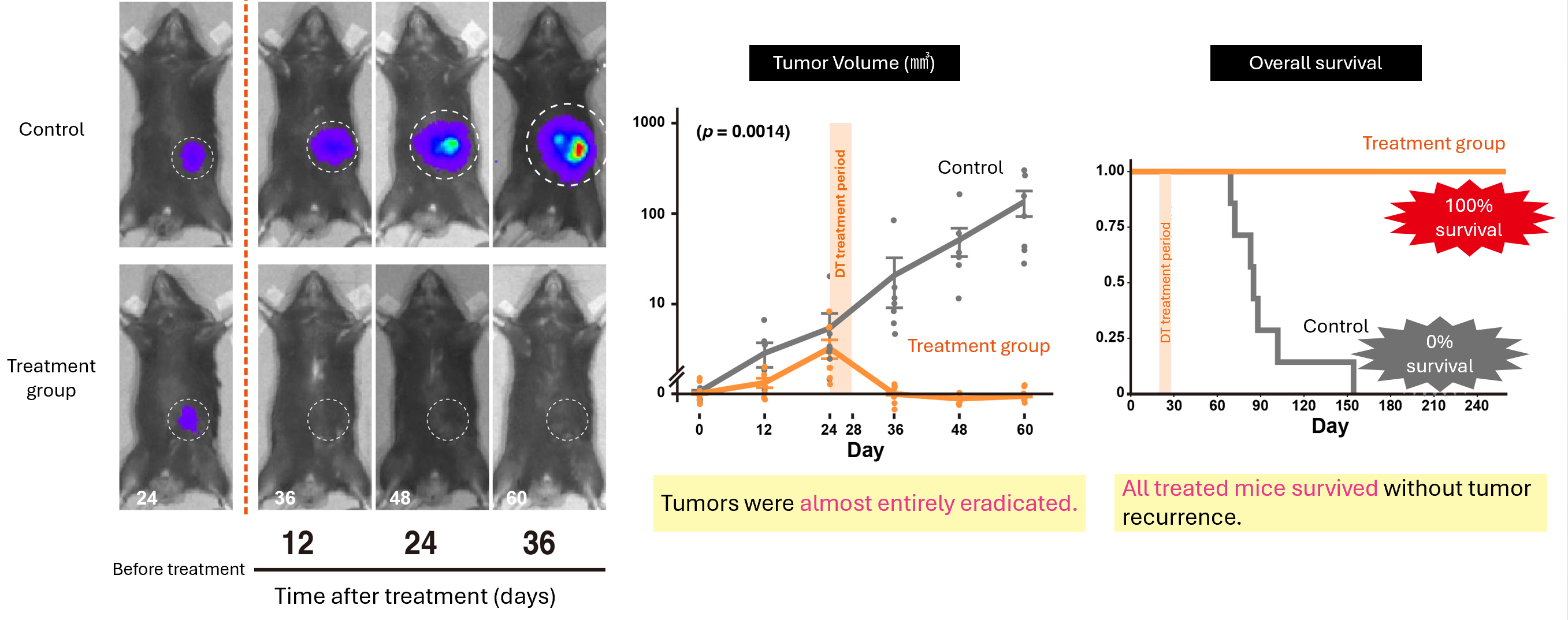
Furthermore, when cells possessing this Y receptor were removed from mice, the pancreatic cancer itself completely disappeared, and no recurrence was observed. This result indicates the potential for fundamentally treating cancer by targeting cancer stem cells.
Treatment Strategy Combining with Photoimmunotherapy
Based on this basic research, we are developing antibodies against Y. Furthermore, by combining this with "photoimmunotherapy," we aim to establish an effective treatment method for pancreatic cancer.
Photoimmunotherapy is a treatment method that destroys only cancer cells by attaching a photo-reactive component to an antibody that binds to cancer cells and irradiating it with light of a specific wavelength from outside the body. It is considered possible to treat with fewer side effects as it does not affect normal cells.
Future Prospects
Currently, this project is in the preclinical stage, and we plan to proceed with antibody optimization, safety testing, and clinical trials. We believe this approach, aiming for a fundamental cure for pancreatic cancer, which has been considered difficult to treat, is innovative and holds significant market value.
Frequently Asked Questions (FAQ)
Q1. What disease does Pipeline 2 target?
A. Pipeline 2 targets "pancreatic cancer," which is extremely difficult to treat. Specifically, it targets cancer stem cells, which are considered the cause of cancer recurrence and progression.
Q2. What is Receptor Y?
A. Receptor Y is a molecule specifically expressed in pancreatic cancer stem cells and is rarely found in normal cells. Targeting it allows for selective attack on cancer stem cells only.
Q3. What are the advantages of combining it with photoimmunotherapy?
A. Photoimmunotherapy destroys only cancer cells by irradiating light onto antibodies bound to them. It is expected to reduce side effects as it can treat without damaging normal tissues.